Invoice Music Students: 5 Steps to Prevent December Tax Surprises

Invoice students with a numbered invoice that lists lesson dates or package items, a due date, and a payment link or clear instructions. Choose a cadence (per lesson, monthly, or semester) and keep every invoice for at least the IRS retention period. Below you will find copy-ready wording, a sample layout, and one option, Allegro, that supports the routine.
TL;DR:
- Number invoices sequentially and list the student, lesson dates or package, quantity, rate, total, due date, payment instructions, and refund or makeup policy.
- Per lesson billing suits irregular schedules, monthly billing steadies income with fewer invoices, and semester packages reduce administration but need clear absence and pause rules.
- For prepaid packages, record tuition as deferred revenue until lessons occur, then reconcile promised and delivered lessons weekly or monthly to track earned income.
- Use standard terms: due on receipt for per lesson billing, Net 15 monthly, and Net 30 only for large semester packages; set your fees independently.
- Keep invoices and receipts for 3 years from filing, or 7 years to cover common exceptions; set aside 25% to 30% for quarterly taxes.
Table of Contents
- What should every music lesson invoice include?
- When should you bill: per lesson, monthly, or by semester?
- What payment terms and methods work best?
- What copy-ready invoice wording can you use?
- How long should you keep invoices, and what about taxes?
- Why I keep billing boring
- How Allegro helps you invoice and keep parents informed
- FAQ
- Sources
What should every music lesson invoice include?
A complete invoice saves you from follow-up emails and makes bookkeeping painless. Copy this checklist into your template:
- Your name or studio name, address, phone, and email
- Student or family name
- Invoice number (sequential, such as 2026-014)
- Invoice date and due date
- Itemized lines with lesson dates or the package name
- Quantity (lesson count) and rate per lesson
- Subtotal, taxes if they apply to you, and total
- Payment instructions and a payment reference
- A one-line policy pointer covering refunds and makeups
Optional extras help too: a “lessons promised vs delivered” memo, a package ID, recital or materials fees as separate lines, and a short note about practice or your contact preference.
Consistency matters more than style. Number invoices in order and write dates unambiguously so a parent never wonders which date you mean. Public examples such as the ISM music tuition template show these same fields in a standard layout.

Pro Tip: Put the due date and the amount in the email subject line too. Parents often pay straight from the subject without opening the attachment.
When should you bill: per lesson, monthly, or by semester?
Per-lesson billing is simple for new or irregular students, but it means more invoices and more chasing. Monthly billing gives you steady, predictable income with one invoice per family. Semester packages mean the least admin and the best cash flow, though they require clear rules for absences and pauses.
Here is a simple way to set up prepaid billing:
- Invoice the full package before the first lesson, with a clear due date.
- Record the cash as prepaid (deferred) revenue, not income you have already earned, a treatment practitioner bookkeeping guidance recommends for prepaid lessons and recital fees.
- Each week or month, compare lessons promised with lessons delivered.
- Move earned amounts into income as lessons happen, so December holds no surprises.
- Put a clear sentence in your enrollment form explaining your refund and makeup policies.
Our makeup policy guide has more wording you can adapt. Pick the cadence that fits your roster, and keep it the same for every family.
What payment terms and methods work best?
Short, standard terms get paid faster. Use “Due on receipt” for per-lesson billing, “Net 15” for monthly invoices, and “Net 30” only for large semester packages. Payment specialists at eBizCharge recommend standardized terms and small early-payment discounts to reduce follow-ups.
Invoicing is common among small firms: the Federal Reserve’s 2024 payments report found that 28% collect payment after delivery via invoice, while 38% collect at the time of service. Either way, put the payment method on the invoice itself. Our guide to a payment link in your invoice explains why a link removes friction.
Footer lines you can paste:
- “Payment accepted by check, ACH, or card. Use the payment link above.”
- “Pay within 7 days of the invoice date and take 3% off.”
- “Invoices unpaid after the due date may incur a late fee; see studio policy.”
For late-fee phrasing, see our late fee wording examples. One caution: set your own fees and terms independently. The FTC warns that teachers and associations discussing or agreeing on fees, billing policies, or missed-lesson charges can be treated as price-fixing. If you need a payment processor, this guide to payment processing for creators covers card and digital options.
What copy-ready invoice wording can you use?
Paste these lines and adjust the details:
- Header: “Invoice 2026-014 | Piano Lessons | Issued 2026-09-01 | Due 2026-09-08”
- Lesson line: “30-minute private lesson, Sept 2026, 4 lessons at $40”
- Recital fee: “Spring recital fee (venue and printing), 1 at $25”
- Payment line: “Pay online at the link in this email, or by check payable to your studio name. Reference: Smith-014.”
- Late fee: “Balances unpaid after the due date may incur a late fee under the studio policy.”
- Prepaid memo: “Fall package: lessons prepaid. Delivered to date: [number]. Remaining: [number].”
Here is how a basic invoice body looks:
For more ready-made lines, grab our invoice wording examples and template.
How long should you keep invoices, and what about taxes?
Keep invoices and the receipts behind them. The IRS says records supporting income, deductions, and credits should generally be kept for 3 years from filing, and longer in specific cases.
The IRS lists 6 years if you underreport income by more than 25%, and 7 years for bad-debt claims. If you never file a return, keep records indefinitely, so a simple habit of saving everything for 7 years covers nearly every case.
Habits that keep you audit-ready:
- Keep one ledger per student: package, lessons promised, lessons delivered, deferred balance. It settles refund disputes fast.
- Reconcile monthly, and use a separate business account, as MTNA’s tax guidance suggests.
- Set aside 25–30% of earnings for estimated taxes, per the same MTNA guidance, and pay quarterly.
- Collect a W-9 from any accompanist or contractor before paying them, and track totals. The filing threshold for 1099-NEC is $600 today, with a possible rise to $2,000 under discussion.
Why I keep billing boring
Dave here. I send one invoice per semester and reconcile lessons every week, so nothing piles up in December. The real friction is rarely the math. It is the scattered emails, the missing payment links, and the “did we pay for that month?” texts. Fixing those takes some setup, and there are tools built for exactly this.
— Dave
How Allegro helps you invoice and keep parents informed
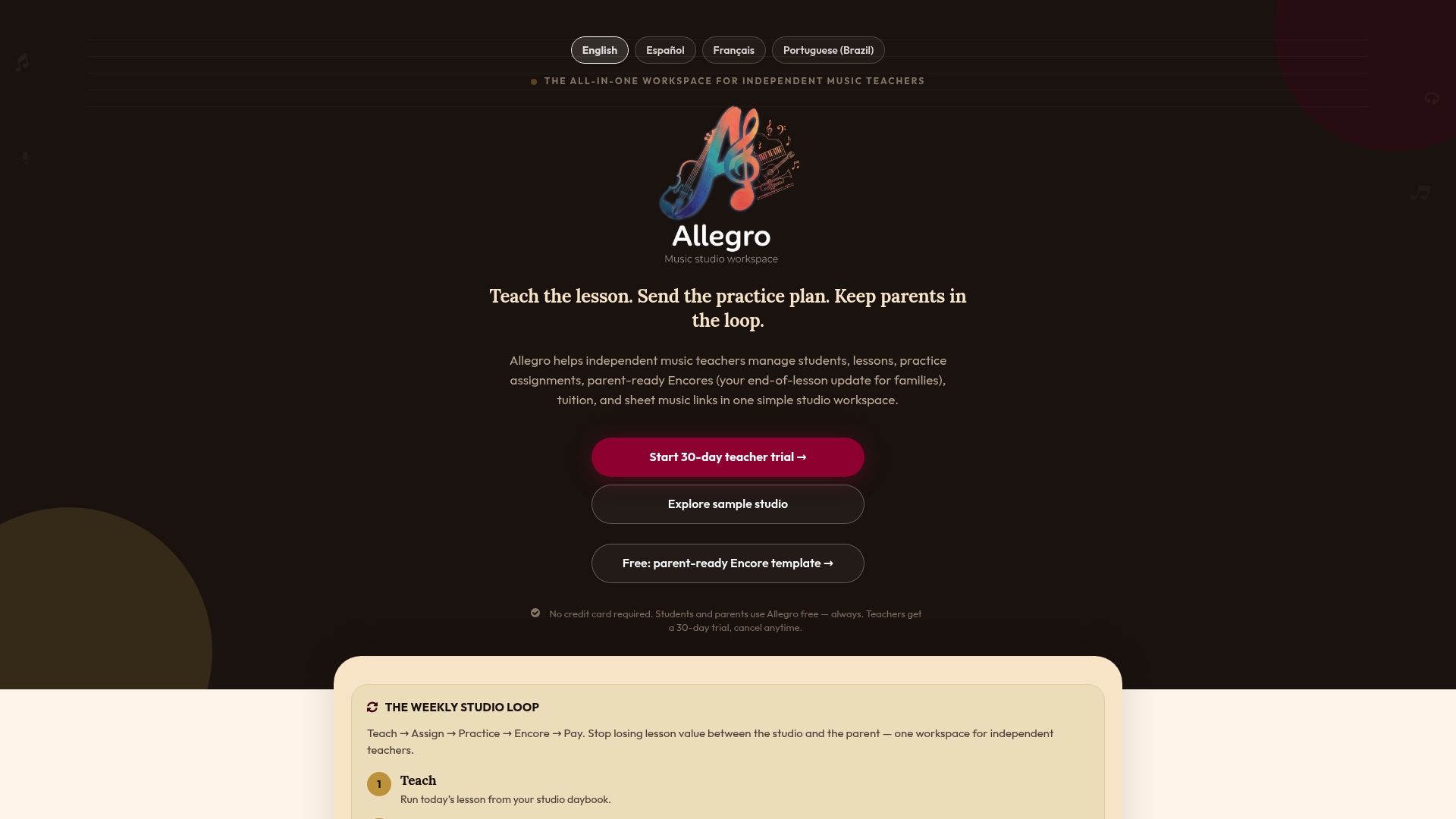
We built Allegro Music Studio so independent teachers can run billing and communication in one place. Here is what you get:
- Tuition tracking with invoices and payment links
- Encores, our parent-ready summaries of what was covered and what to practice next
- Free templates for studio policies, scheduling, and parent communication
Try the Solo plan or the Studio plan at $39 per month, and see the templates and payment-link features at Allegromusic.
This article is general information, not a substitute for advice from a qualified financial advisor. Consult a qualified financial professional about your own circumstances before acting on anything here.
FAQ
What is the simplest way to invoice music students?
Send a numbered invoice that lists lesson dates or a package name, a total, a due date, and a payment link. Use the same format and cadence for every family so parents know what to expect.
Should I invoice monthly or per lesson?
Monthly invoicing usually means less admin and steadier income, while per-lesson billing suits irregular schedules. Choose one cadence, state it in your studio policy, and apply it consistently.
How long do I need to keep student invoices?
The IRS generally says to keep supporting records for 3 years from filing, with longer periods in some cases. Keeping invoices for 7 years covers the longest common case.
How do I treat prepaid lessons for bookkeeping?
Record prepaid tuition as deferred revenue until the lessons are delivered. Reconcile lessons promised against lessons delivered each period, as outlined in bookkeeping guidance for music teachers.
Sources
- How long should I keep records? | Internal Revenue Service
- Ftc
- Independent Private Music Teacher Bookkeeping (Piano, Guitar, Voice, Strings): Schedule C and Quarterly Estimated Taxes, Prepaid Lesson and Recital-Fee Deferred Revenue, Home Studio Deduction, Instrument and Equipment Section 179, and the New $2,000 1099-NEC Threshold Explained for Solo Instructors