Music Lesson Refund Policy: Copy Ready Clauses That Prevent Disputes

Require at least 24 to 48 hours’ notice for cancellations, and default to credits or makeups rather than cash refunds for timely changes. Prepaid packages should refund unused lessons on a pro-rata basis if the student withdraws, since courts and some state laws treat cancellation fees as unenforceable without that math. Illness and emergencies deserve documented flexibility, not automatic forfeiture.
TL;DR:
- Require 24 hours’ notice for weekly private lessons and 48 hours for group classes or longer sessions; offer credits or makeups for timely cancellations.
- Calculate prepaid refunds as unused lessons divided by lessons purchased, multiplied by the price; California bars cancellation fees for certain lesson contracts.
- Cancellation fees are enforceable only when they reasonably reflect actual losses and are disclosed before booking; repeat the policy on booking pages, invoices, and welcome emails.
- Treat late cancellations differently from no-shows: timely notice may earn a credit or makeup, no-shows may forfeit lessons, and teacher cancellations warrant a makeup or credit.
- Document illness and emergency exceptions, and keep dated cancellation requests plus a ledger of credits and refunds; obtain each family’s policy acknowledgment before payment.
Table of Contents
- Key Terms Every Teacher and Parent Should Know
- Core Policy Elements to Decide Before You Publish Anything
- Legal Enforceability and State-Specific Rules to Watch
- Copy-Ready Clauses You Can Publish Today
- Communicating and Enforcing Policy Without Burning Bridges
- Administrative Habits That Cut Down Refund Disputes
- What Studio-First Policy Design Actually Prioritizes
- A Short Note on Fair Policy
- A Practical Way to Put This Policy Into Practice
- FAQ
- Sources
Key Terms Every Teacher and Parent Should Know
Refund policies get contentious mostly because teachers, parents, and students use the same words to mean different things. Nailing down the vocabulary first prevents half the disputes that show up later over invoices.
- Refund: money returned to the payer, usually for lessons paid for but not delivered.
- Credit: a non-cash balance applied toward a future lesson, common when a student cancels with proper notice.
- Pro rata: a proportional calculation, refunding or crediting only the unused portion of a prepaid package or term.
- Late cancellation: a cancellation made after the studio’s notice window has closed, often forfeiting the lesson or triggering a fee.
- No-show: the student simply doesn’t appear, with no notice at all, typically the strictest category.
- Makeup: a rescheduled session offered in place of a canceled or missed lesson, usually time-limited.
Billing structure changes how these terms apply. Pay-per-lesson students owe money only for sessions actually scheduled, so a cancellation mostly affects future bookings. Monthly tuition students pay a flat rate regardless of how many lessons fall in a given month, which is why many studios treat tuition as covering the teacher’s reserved time rather than a fixed lesson count. Prepaid packages sit in between: the student has already paid for a set number of sessions, so unused lessons need either a makeup slot or a pro-rata refund when the relationship ends.
Someone has to own scheduling and documenting makeups, and leaving that ambiguous is where most billing arguments start. Whether that’s the teacher, a studio manager, or shared responsibility through a booking system, the policy should say so explicitly, in writing, before the first invoice goes out.
Core Policy Elements to Decide Before You Publish Anything
A workable policy answers five questions in advance, so neither side has to improvise during an awkward phone call.
- Notice window: 24 hours is standard for a single weekly lesson; 48 hours fit group classes or lessons longer than an hour, since rebooking that slot takes more coordination.
- Makeup rules: specify who can request one (student-initiated cancellations with notice, not no-shows), how it’s scheduled (within the same week or a set expiration, often 30 days), and what happens if the teacher cancels, which should always earn the student a makeup or credit, no exceptions.
- Prepaid refund math: calculate refunds as (unused lessons ÷ total lessons purchased) × package price, and state whether a small registration deposit is nonrefundable, which is common and generally defensible if disclosed upfront.
- No-show versus credit: a true no-show (zero notice) can reasonably forfeit the lesson or trigger a fee, while a late cancellation with partial notice might earn a credit instead of a full forfeiture, a middle ground that keeps goodwill intact.
- Closures and emergencies: publish the studio’s holiday calendar at the start of the term so tuition math is transparent, and build in a documented illness or emergency exception, since a student hospitalized mid-term has a very different claim than one who simply forgot a lesson.
Industry guidance consistently points toward 24 to 48 hour notice windows paired with credits or makeups rather than automatic refunds for missed sessions, largely because credits protect a teacher’s income while still giving families a fair outcome. Teacher-cancelled sessions are the one case where a credit or makeup should be close to automatic, since the student held up their end of the booking.
Legal Enforceability and State-Specific Rules to Watch
Cancellation fees are not automatically enforceable just because they’re written into a contract. In the United States, they generally hold up as liquidated damages when they reflect a reasonable estimate of actual loss and were disclosed clearly before the student booked, a standard legal guidance on unfair contract terms describes as the difference between an enforceable fee and one a court strikes down.
A fee buried in fine print is far more likely to be challenged successfully than one disclosed at booking, according to that same guidance on contract disclosure, which is the single strongest argument for putting your policy in writing everywhere a parent will see it.
State law adds another layer. California Civil Code §1812.54 requires pro-rata refunds for certain lesson contracts and forbids cancellation fees when the student is the one canceling, a reminder that a policy legal in one state may not hold up in another. Teachers working across state lines, or building a template to sell or share, should check local consumer-protection rules before assuming a flat cancellation fee will stick.
A short recordkeeping habit solves most of this risk:
- Keep a signed or digitally acknowledged copy of the policy from every family.
- Date-stamp every cancellation request as it comes in.
- Log credits and refunds in a running ledger, not just in memory.
- Save invoices showing the policy text was presented before payment.
Copy-Ready Clauses You Can Publish Today
Three templates cover most studio billing models. Adapt the numbers, not the structure.
- Template A, pay-per-lesson: “Cancellations require 24 hours’ notice. Lessons canceled with notice earn a makeup within 30 days. Lessons canceled with less notice, or missed without notice, are charged in full.”
- Template B, prepaid package: “Packages are refundable on a pro-rata basis for unused lessons if you withdraw. A $25 registration fee is nonrefundable. Credits for canceled lessons expire 30 days after issue.”
- Template C, semester tuition: “Tuition covers your reserved weekly slot for the full term, not a fixed lesson count. Missed lessons may be made up based on availability; tuition itself is credit-only, not refundable, except as required by law. The studio’s holiday schedule is published at term start.”
For the no-show and teacher-cancellation clauses specifically: “No-shows forfeit the lesson with no credit. If I need to cancel your lesson, you’ll receive a makeup slot or a credit within 48 hours.”
Pro Tip: Paste the exact clause text onto your booking page, your invoice footer, and your welcome email, so no family can say they never saw it.

Publishing the same wording in three places, rather than relying on a single contract a parent might skim once, is what actually prevents the “I didn’t know” conversation later.
Communicating and Enforcing Policy Without Burning Bridges
Policy only works if families see it before they need it, not after a disputed charge. Show it at three points: the booking confirmation, the first invoice, and a welcome packet for new students.
- Lead with calm, factual language: “Your lesson on Tuesday falls outside our 24-hour window, so it’s billed as scheduled; I’d be glad to offer a makeup if one opens this week.”
- Reserve goodwill exceptions for genuine one-offs, documented in writing, like, “Given this was your first missed lesson, I’m issuing a one-time credit.”
- Keep a simple exceptions log so a single goodwill gesture doesn’t quietly become the new unwritten policy.
- For unresolved balances, send one written reminder with the invoice attached before escalating, and know that small-claims court is a realistic last resort for amounts that don’t justify a lawyer.
Firm, friendly, and consistent beats either doormat or drill sergeant. Most parents respect a policy they were shown upfront far more than one invoked only when it benefits the teacher.
Administrative Habits That Cut Down Refund Disputes
A handful of operational tweaks prevent most billing arguments before they start.
- Send automated booking confirmations that require a digital acknowledgment of the cancellation policy.
- Track every credit in a single ledger, with a published expiration window, so nothing relies on memory.
- Attach a secure payment link directly on each invoice, and keep receipts organized for tax season.
- Block out recurring lesson slots and publish an open makeup calendar, so rescheduling doesn’t require a back-and-forth text thread.
- Standardize how makeups get booked, through the same link or form every time, rather than case-by-case.
Consistency here does double duty: it reduces the odd dispute and it makes a teacher’s week easier to plan.
What Studio-First Policy Design Actually Prioritizes
Protecting a teacher’s time matters as much as protecting their income. A policy that’s written down, documented at booking, and backed by dated lesson notes gives both sides something concrete to point to, which is usually enough to settle a disagreement before it becomes one.
A Short Note on Fair Policy
A clear notice window, written down and acknowledged before the first invoice, is the single highest-leverage decision a teacher can make. It protects your income on the weeks that go sideways and protects a student’s access to consistent instruction on the weeks that don’t.
— Dave
A Practical Way to Put This Policy Into Practice
Writing the policy is the easy part. Keeping it enforced, documented, and visible across booking pages, invoices, and dozens of parent conversations is where most independent teachers lose hours every week. That’s the gap we built our platform to close.
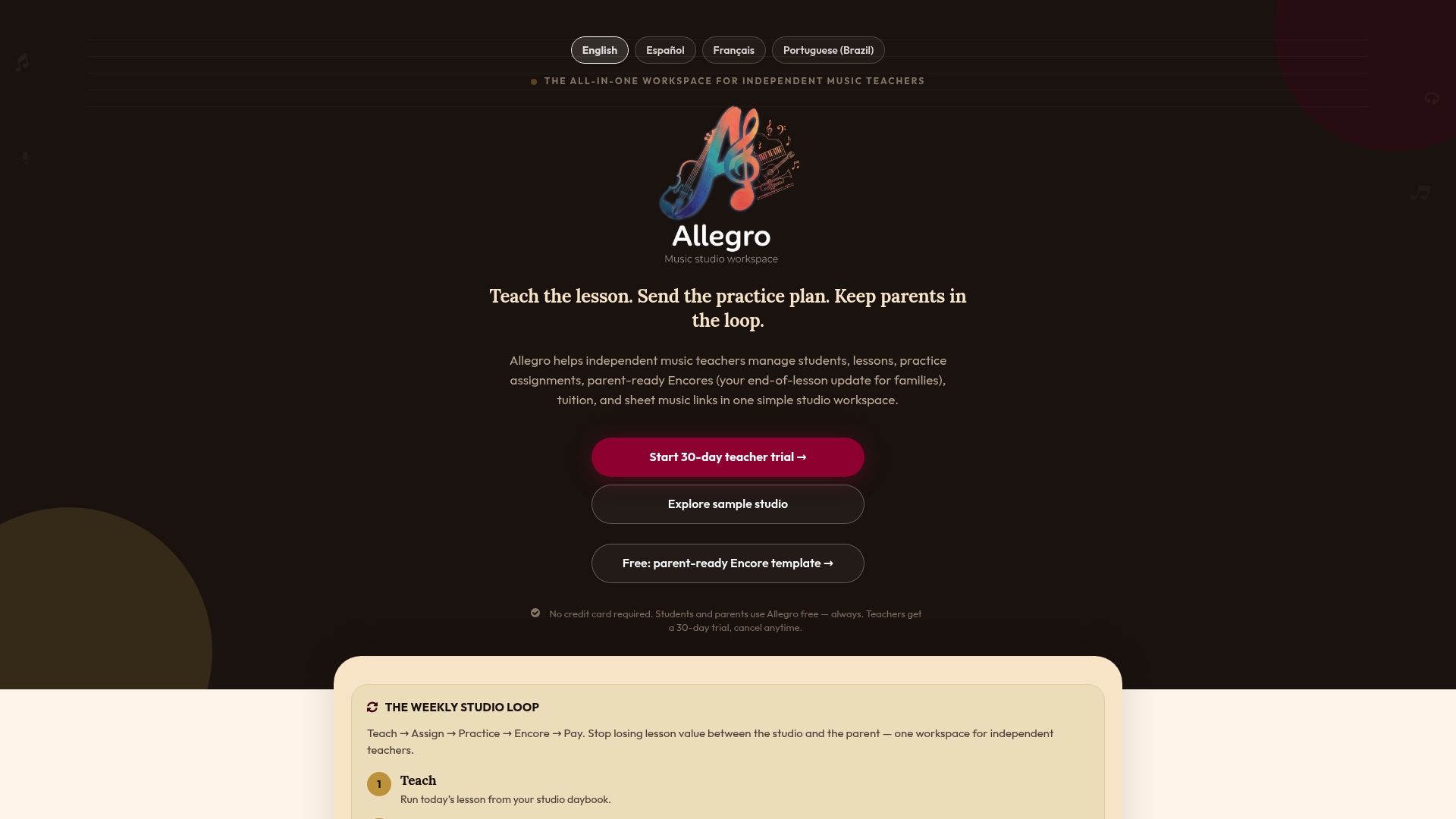
Our workspace keeps lesson management, invoicing, and parent communication in one place instead of scattered across texts and spreadsheets.
- Publish your cancellation and refund policy once, and attach it to every booking and invoice automatically.
- Send parent-ready Encores after each lesson, so progress notes and practice plans double as a paper trail if a dispute ever comes up.
- Track tuition, credits, and payment links in one ledger instead of a notebook or a dozen email threads.
If you’re ready to spend less time chasing invoices and more time teaching, visit the Solo and Studio plans to see which fits your roster.
FAQ
Do you legally have to pay a cancellation fee?
It depends on your state and how the fee was disclosed. Cancellation fees are generally enforceable if they’re a reasonable estimate of the provider’s loss and were made clear before booking, but some states restrict them outright, such as California Civil Code §1812.54, which requires pro-rata refunds and bars cancellation fees for certain lesson contracts.
Can music lessons be tax deductible?
Generally, no, music lessons taken for personal enjoyment or enrichment are not tax deductible. They can qualify as a business expense if they maintain skills required for a professional musician’s existing work, or as a medical expense in specific, well-documented cases, according to tax guidance on music lesson deductions.
How do you tell a music teacher you want to quit?
Check your studio’s written cancellation policy first, since most require some notice period before your last paid lesson. A short, direct message thanking the teacher and giving the required notice, typically 24 to 48 hours or more for packages, is standard and keeps any remaining credit or refund straightforward.
How much is a 30-minute piano lesson?
Typical pricing for a 30-minute private lesson in the United States commonly falls in the roughly $30 to $60 range, with monthly tuition for a weekly 30-minute slot often landing between $130 and $200, according to a 2026 pricing index of 24 providers across 8 cities. Exact rates vary by city, instrument, and teacher experience.
Sources
- California Civil Code §1812.54 (contracts for dance studio lessons and other services)
- Guidance on unfair contract terms and disclosure from legal experts
- 2026 Music Lesson Pricing Index: 24 Providers, 8 Cities
- Are Music Lessons Tax Deductible? IRS Rules & Loop-holes