Sibling Discount Policy: Copy Ready Rules for Small Studios

A sibling discount policy is an institutional rule that reduces tuition when two or more children from the same household enroll at the same time. Most policies require simultaneous full-time enrollment and dependent status, and the discount comes from the school itself, not from federal aid. Filing the FAFSA with multiple kids in college does not trigger an automatic tuition discount.
TL;DR:
- Most schools require annual applications, proof of sibling relationship and dependency, and verification by the term’s census date; missed deadlines usually eliminate that term’s award.
- A 10% discount on a second sibling’s $20,000 tuition bill saves $2,000, but typical policies exclude fees, housing, meals, and summer terms.
- If existing scholarships or financial aid cover tuition, a sibling discount may not lower the bill because schools often cap institutional aid at tuition.
- A percentage discount rises with tuition, while a fixed credit stays constant and can deliver greater relative savings at lower tuition prices.
Table of Contents
- What a Family Discount Looks Like in Practice
- Who Qualifies and How Families Apply
- How Much Sibling Discounts Actually Save Families
- Sibling Discounts, FAFSA, and How Schools Report Them
- Sample Policy Language Administrators Can Reuse
- Running Sibling Discounts Smoothly in a Small Studio
- Designing a Sibling Discount That Lasts Beyond One Semester
- Managing Family Discounts Without the Spreadsheet Chaos
- FAQ
- Sources
What a Family Discount Looks Like in Practice
A sibling discount, also called a family tuition discount or multi-child discount, exists to make tuition more affordable for families with several children enrolled at once. Schools offer them for practical reasons: they support enrollment goals, encourage families to keep siblings at the same institution, and act as a modest retention tool when a family already values the school.
Policies take a handful of common shapes:
- A flat percentage off tuition for each additional sibling enrolled simultaneously.
- A fixed per-sibling credit applied each semester, regardless of tuition level.
- A tiered scale that increases the discount as more siblings enroll, often capped at a maximum percentage or dollar amount.
Each format solves the same problem differently. A percentage model scales with tuition and feels proportional to families, while a flat credit is easier for administrators to budget and explain. Tiered scales reward larger families but need clear caps so the discount rate does not erode revenue as enrollment grows.
Who Qualifies and How Families Apply
Eligibility rules are fairly consistent across institutions, even though exact percentages and dollar amounts vary. Most schools require proof of relationship and enrollment status before approving an award, and the process typically follows the same sequence:
- Confirm that siblings are enrolled simultaneously, usually full-time, in the same academic term.
- Verify dependent status and shared household, often through a parent’s tax return or FAFSA data.
- Submit documentation such as birth certificates, adoption records, or a parent’s sworn statement confirming the sibling relationship.
- File the discount application within the school’s stated window, since most policies, including UIW’s sibling discount application, require an annual submission rather than a one-time approval.
- Wait for verification against the census date, the point at which enrollment is locked in for the term.
Timing matters more than families expect. Gonzaga University’s family discount requires notice before the semester begins, and like most policies it does not allow retroactive awards. If a family misses the deadline, the discount is typically forfeited for that term, not just delayed.
How Much Sibling Discounts Actually Save Families
Discount amounts vary widely by institution and format, but three structures dominate: percentage discounts, flat per-sibling credits, and graduated scales that increase with each additional sibling.
Many institutional sibling discount policies require annual reapplication and verification, and most do not allow retroactive awards, according to Gonzaga University’s family discount policy. That single detail explains why families who assume the discount renews automatically are often surprised when a late application costs them a full semester’s savings.
Two quick examples show how the math plays out:
- A family with two siblings paying $20,000 tuition each, under a 10% sibling discount, saves $2,000 off the second student’s bill, dropping that tuition to $18,000.
- A family using a flat per-semester credit, like the fixed award in UIW’s sibling discount application, receives the same dollar reduction regardless of tuition level, which matters more at lower-cost institutions.
Caps and exclusions shape the real savings. Discounts typically apply to tuition only, not to fees, room and board, study abroad programs, or summer terms. When a student already receives a large need-based or merit award, a sibling discount may add little to the family’s actual net cost once other aid already caps the total award at full tuition.
Sibling Discounts, FAFSA, and How Schools Report Them
Financial aid and institutional sibling discounts operate on separate tracks, and conflating them leads to confusion every enrollment season.
Federal financial aid is calculated per student. The FAFSA process collects information about multiple family members in college, but it does not provide a specific sibling discount. Federal Student Aid, on filing when more than one child is in college
That distinction matters for planning. A family filing FAFSA for two children in college may see each student’s aid package adjusted based on household income and the number enrolled, but that is a federal aid calculation, not a school-issued discount. A sibling discount, by contrast, is an institutional policy layered on top of, or alongside, any federal or need-based aid the family already receives.
On the accounting side, schools cannot simply write off a sibling discount as a routine price cut. IPEDS reporting guidance treats scholarships, grants, and institutional discounts used to offset tuition as discounts and allowances under standard financial reporting rules, which means schools need accurate records of who received what, and why. Many policies also cap total institutional aid at full tuition, so a sibling discount stacked on existing merit aid may not lower a family’s net bill at all.

Sample Policy Language Administrators Can Reuse
A clear, modular policy prevents most disputes before they start. Consider structuring the written policy in five short clauses:
- Eligibility: siblings must be enrolled simultaneously, full-time, and claimed as dependents of the same household.
- Calculation method: state whether the discount is a percentage, a flat credit, or a tiered scale, and name the exact figures.
- Exclusions: specify that the discount applies to base tuition only, excluding fees, room and board, and summer terms.
- Documentation: list required proof, such as birth certificates or a parent’s signed statement.
- Deadlines: state the application window and confirm that awards are not retroactive.
For families, a short checklist pairs well with the policy itself:
- Confirm both students are enrolled full-time for the same term.
- Gather proof of relationship and household dependency.
- Submit the application before the published deadline, not after.
Note in writing that awards apply only going forward from approval, that processing typically takes a few weeks, and that questions go to a named financial aid or billing contact rather than a general office inbox.
Running Sibling Discounts Smoothly in a Small Studio
Independent music teachers and small studios face the same mechanics as large institutions, just at a smaller scale and usually without a finance office to lean on. Tagging family accounts in a roster, applying a standard invoice adjustment, and keeping a single record of who qualifies prevents the manual errors that creep in when discounts are tracked in spreadsheets or sticky notes.
A short announcement when the policy launches, paired with a line item on every invoice showing the discount applied, keeps families informed without extra back-and-forth. Parent-ready lesson summaries reinforce that transparency by pairing financial clarity with a clear record of what each student is working on.
Pro Tip: Set a single renewal date for all family discounts each year so verification happens once, not on a rolling, hard-to-track basis.
Designing a Sibling Discount That Lasts Beyond One Semester

A generous sibling discount that is never revisited becomes a budget problem within a few years. The rate and cap you choose should reflect what the school or studio can sustain, not just what feels fair in the moment.
Annual reapplication and a firm deadline protect both sides: families know exactly what to expect, and administrators avoid quietly expanding an unfunded commitment. Track how many families use the discount each term and adjust before it becomes unsustainable, not after.
— Dave
Managing Family Discounts Without the Spreadsheet Chaos
Running a sibling discount by hand works until the second or third family asks for one, and then the manual tracking starts to show cracks. The platform can handle that layer for independent teachers: flag family accounts on the roster, apply a standing invoice adjustment automatically, and keep a single record of verification instead of chasing it down every renewal.
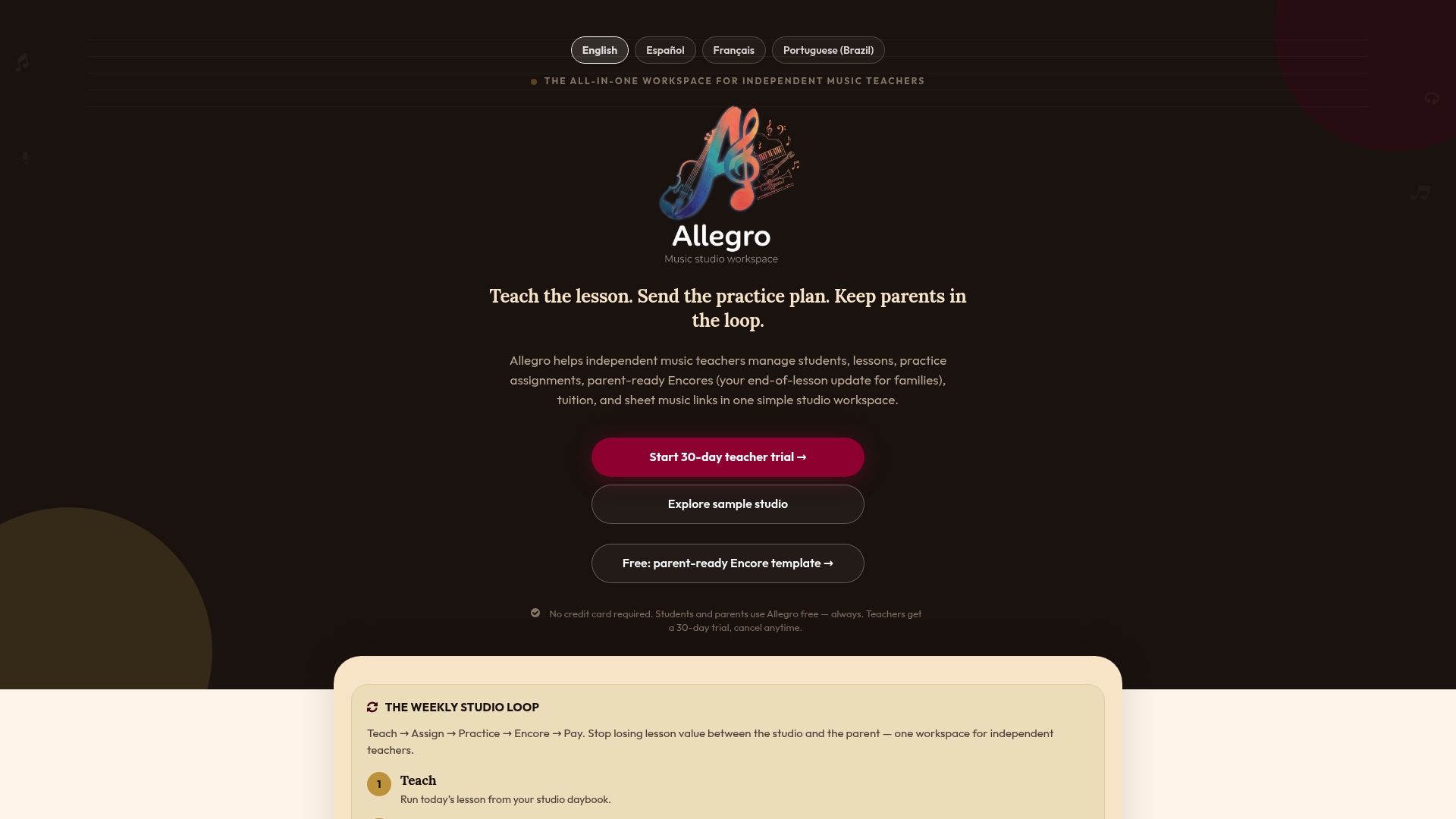
- Roster flags that link siblings under one family account for consistent billing.
- Invoice adjustments and payment links that apply the discount without manual recalculation each month.
- Parent-ready summaries alongside invoices, so the discount and the lesson progress live in one place.
See how a working studio handles family accounts and billing on our sample studio page, or compare Solo and Studio plans to find the right fit for your roster size.
FAQ
Does FAFSA consider multiple kids in college?
The FAFSA process collects information when a family has more than one child enrolled in college, but it calculates aid per student rather than issuing a household discount. Federal Student Aid confirms that having multiple children in college does not create an automatic tuition discount.
How old do you have to be to get a student discount?
Age requirements vary by provider and are not tied to sibling discount policies, which depend on enrollment status and household relationship rather than age. Most sibling tuition discounts require full-time enrollment and dependent status, not a minimum age.
What does “sibling student” mean?
A sibling student is one of two or more children from the same household who are enrolled, typically full-time, at the same institution during the same term. Schools generally require proof of the relationship, such as birth certificates or a parent’s dependency statement, before approving the discount.
Does Bright Horizons offer a sibling discount?
Specific third-party provider policies are not covered in this article; check directly with the provider in question for current eligibility and discount details, since policies change by location and plan.
How do caps and other financial aid affect a sibling discount?
Many institutions cap total institutional aid at full tuition, so a sibling discount layered onto an existing large scholarship or need-based award may not reduce the family’s net cost further. Reviewing the tuition discounting literature helps administrators model that interaction before setting rates.
Sources
- FAFSA: How to file when more than one child is in college
- Sibling Discount Application | University of the Incarnate Word
- Family Discount | Gonzaga University
- IPEDS: Report your data — scholarships, grants, discounts, and allowances
- Tuition discounting and institutional aid strategies (ERIC / NACUBO overview)